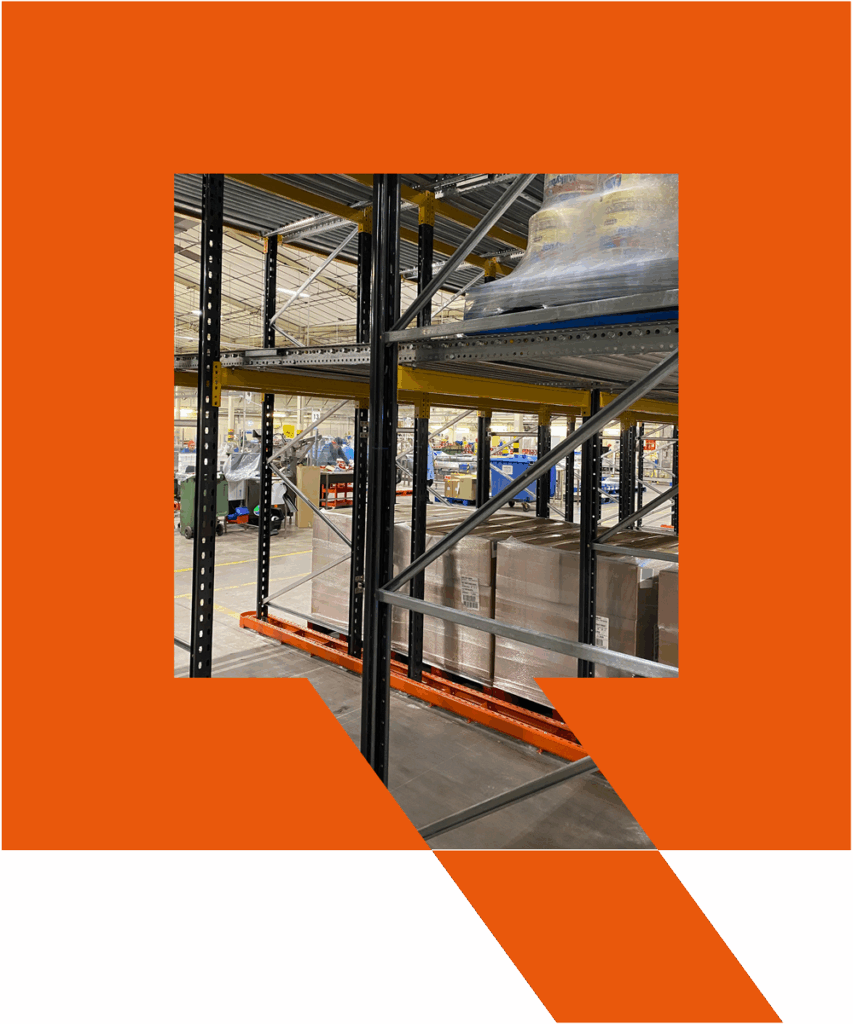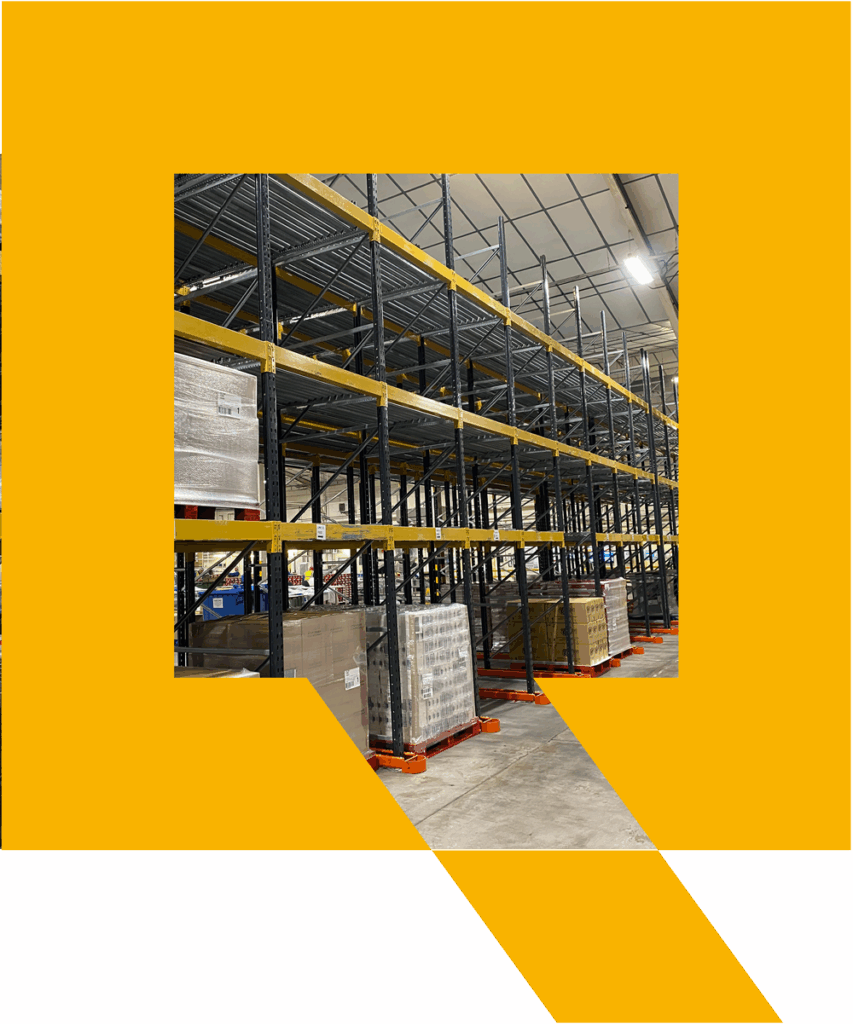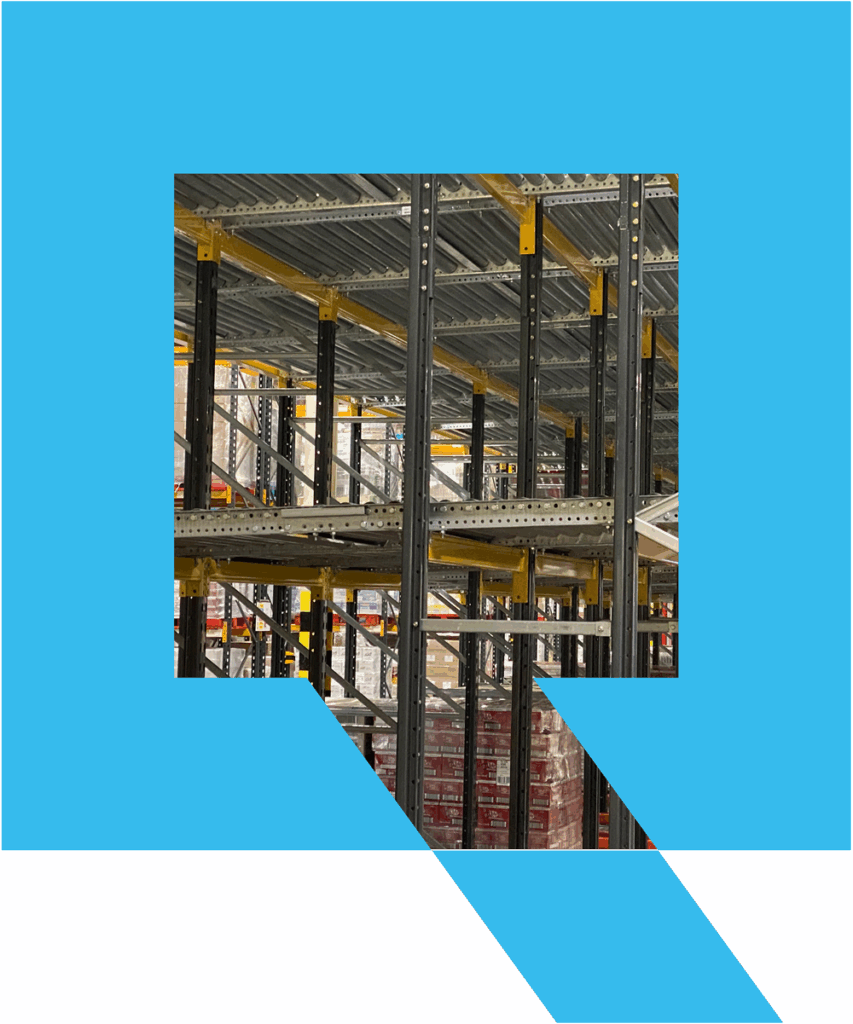
Push-Back Racking Systems
High-Density Push-Back Racking for Efficient Warehouse Storage
Push-Back Racking is one of the most effective warehouse storage solutions for businesses looking to maximise pallet storage capacity while maintaining fast and efficient stock handling. Designed for high-density pallet storage, push back systems allow multiple pallets to be stored deep within each lane, reducing the number of aisles required and making better use of valuable warehouse space.
Ideal for operations handling medium to large volumes of palletised goods, push-back racking provides excellent storage density while allowing direct access from a single aisle. The system operates using a Last In, First Out (LIFO) stock rotation method, making it particularly suitable for bulk storage, seasonal products, non-perishable goods, and batch-managed inventory.
At Qubestor, we design, supply and install bespoke push-back racking systems tailored to your warehouse requirements, helping businesses across the UK improve efficiency, increase storage capacity and streamline material handling operations.
What is Push-Back Racking?
Push-Back Racking is a dynamic pallet storage system that stores pallets on a series of nested carts or roller tracks positioned on an inclined structure.
As each new pallet is loaded, it gently pushes the existing pallet further back into the lane. When a pallet is removed, gravity allows the remaining pallets to move forward automatically to the picking position.
Unlike drive-in racking systems, forklift trucks do not need to enter the storage structure, which improves safety, reduces the risk of rack damage and increases handling efficiency.
Key Characteristics
- High-density pallet storage
- Last In, First Out (LIFO) inventory management
- Multiple pallets stored deep within each lane
- Direct access from the aisle
- Compatible with most standard forklift trucks
- Reduced aisle requirements
- Improved warehouse space utilisation
How Does Push-Back Racking Work?
Push back racking uses a system of inclined rails combined with nested carts or rollers to move pallets within a storage lane.
Loading
- The first pallet is placed at the rear of the lane.
- Additional pallets are loaded from the same aisle.
- Each pallet pushes the previous pallet further back into the system.
- Multiple pallets can be stored within a single lane.
Unloading
- The front pallet is removed by a forklift.
- Remaining pallets automatically move forward.
- The next pallet becomes immediately accessible at the picking face.
This simple yet highly effective design reduces travel time for forklifts and helps maintain smooth warehouse operations.
Benefits of Push-Back Racking
Maximise Storage Capacity
Push-back racking dramatically increases warehouse storage density by reducing the number of aisles needed. More floor space can be dedicated to storing products rather than vehicle access.
Faster Pallet Handling
Because all loading and unloading takes place from the aisle face, forklift movements are minimised, improving operational productivity and reducing handling times.
Lower Operating Costs
Improved space utilisation can delay or eliminate the need for costly warehouse expansions, helping businesses make better use of their existing facility.
Improved Stock Management
Each storage lane can be dedicated to a separate product line or SKU, making inventory organisation straightforward and efficient.
Enhanced Safety
Forklift trucks remain outside the racking structure, reducing potential damage to frames and lowering the risk of accidents compared with drive-in storage systems.
Reliable and Low Maintenance
Push-back racking systems are built using robust steel structures and high-quality rolling mechanisms to provide reliable performance in demanding warehouse environments.
Ideal Applications for Push Back Storage Systems
Push back racking is commonly used in industries requiring high-density pallet storage and rapid stock access, including:
- Manufacturing facilities
- Food and beverage distribution
- Retail distribution centres
- Third-party logistics (3PL) operations
- Wholesale warehouses
- Automotive parts storage
- Consumer goods distribution
- Cold storage and chilled warehousing
The system is particularly effective where multiple pallets of the same product are stored together and LIFO stock rotation is acceptable.
Key features
Multi-deep lanes (up to 16 pallets per level)
Separate lanes per SKU for flexible allocation
Smooth, controlled travel on carts/rollers
Configurable lane depth and bay heights
Benefits
More capacity, fewer aisles
Quick handling from the aisle face
Good SKU segregation by lane
Robust, low-maintenance system